
MOONLIGHT: WHAT YOU CAN TAKE FROM THE OSCAR BEST PICTURE ABOUT RELATIONSHIPS IN LIFE
- mitoggy
- Jul 25, 2019
- 5 min read

Updated: Jul 29, 2019
Kevin: Who is you, man?
Black: Who, me?
Kevin: Yeah, you. Them fronts? That car? Who is you, Chiron?
Oscar winner Moonlight (2016) tells the story of a young black man as he changes and adapts to different living environments, as seen through three life stages from childhood, teenage years and his early adulthood.
Written and directed by Barry Jenkins and based on the play “In Moonlight Black Boys Look Blue” by Tarell Alvin McCrane, Moonlight is an “achingly romantic and uncommonly wise” coming-of-age drama that embraced the concept of self-identity in a range of perspectives.
1.The Internal and External Self
Throughout the film, we witness Chiron struggled to find himself and to fit in with his surroundings. As a defense mechanism, Chiron shut down and retreated into his own world every occasion where others tormented him because of his differences.
The gap between Chiron’s inner and outer self is depicted more clearly when he met Juan who found him in hiding from other boys. As Juan taught Chiron how to swim, we saw Chiron floating above the water as if a shadow of himself, detached from the harsh environment of his reality. The bobbing movement of camera in the water helped describe the unsteadiness of Chiron’s emotions and showed how conflicted he was about his identity.
Since Juan and his girlfriend Teresa began taking care of Chiron, slowly the gap between his external and internal self was shortened. Chiron felt safe and secure in their presence to acknowledge his feelings and put his guard down enough to express himself. We get to see Chiron as who he was behind the scared and withdrawn outer layer: a gentle and compassionate young boy who was desperate for love in his life.
Juan: I got you. I promise. I won't let you go.
Teresa: Stop putting yo' head down in my house! You know my rule. It's all love and pride in this house!
However, as an adult, Chiron went through a drastic change, becoming an intimidating, muscular drug-dealer. When he reconciled with his childhood friend Kevin, the latter quickly saw through the hyper-masculine image Chiron put on.
Indeed, only those who know you, who understand you and accept you could recognize who you are and appreciate all your strengths and weaknesses.
In his adolescence, Chiron spent an intimate night with Kevin on the beach, where the duo talked about a relaxing breeze once in a while that helped everyone breathe. To Chiron, the breeze symbolized the presence and love of people who cared about him, with whom he was only his authentic self around, and he could take a breather from putting on a protective but heavy outer layer.

Moonlight has successfully communicated the importance of having genuine love in life in relation to how one expresses oneself, because only in front of unfeigned affection could we reveal the most candid portrayal of ourselves.
2. What Defines Family
Moonlight has regarded the concept of family and illustration of parenthood painfully honest.
Chiron’s mother Paula, a strong, trying woman grappled to raise a child in a hard up neighborhood with a very short list of income opportunity but a long list of corruption available outside every door. Paula gradually grew unable to properly take care of her son and became a victim of her circumstances, falling into the use of drugs.
On many occasions, we saw Chiron clumsily attempted and failed to care for himself, which was when another duo of parental figures stepped in. Contrasting with his mother who not only didn’t provide for him but also tore him down, Juan and Teresa nurtured Chiron, giving him a positive influence and remained an encouraging presence throughout his life.

While Paula offered no protection and instead ridiculed her son for his sexuality, the couple supported him and taught him to stand up for himself against prejudice, an admirable mindset considering their environment.
Juan: You can be gay, but you don't have to let nobody call you a faggot.
However, trying to play the role of a father figure to Chiron, Juan had his own impediments, being part of the cause of the hardships Chiron endured by being a drug dealer and indirectly supplied to Chiron’s mother.
Paula: You gonna raise my son?
Juan: You gonna raise him?
A drug dealer and a drug addict -the only two forces of supposed care-takers of Chiron- argued about the congruence of each other, while both incapable of changing their conditions.
Not just an authentic portrait of the living situation of a large number of black children, the film described the reality of parenthood, where sacrifices and hard work are integral to fulfill the heavy responsibility of raising a child. Moreover, the people one may consider family aren’t bound by blood, but by the efforts and the love one feel under their care.
3. The Self VS Outside Expectations
The main theme of Moonlight dealt with the journey of finding yourself, which will ”strike plangent chords for anyone who has ever struggled with identity, or to find connections in a lonely world”.
Being different from other people and expectations of who he was supposed to be created many obstacles for Chiron to be accepted in his community. His nickname “Little” was put onto him by his peers in remark of his appearance and personality, which followed him for a long time as he suffered from abuse and homophobia.
Kevin was also a casualty of toxic masculinity ideal set by society, when he had to discard his kind nature to put up a fight with his own best friend, who was vulnerable and alone. Peer pressure has impacted negatively on him, through his action of having sex with a girl because all his friends were doing the same, and later getting into an unhappy heterosexual marriage despite his attraction to Chiron.
As Chiron grew older, he understood the need to tailor himself to what society wanted him to be in order to escape excruciation and to belong. Despite his tough exterior, we saw glimpses into his character and he still seemed as lost and vulnerable as the young boy he once was.
Juan has told him a cautionary story as he taught Chiron to swim all those years ago, about a woman who labeled him as she perceived. “In moonlight, black boys look blue. That’s what I’ll call you, Blue.” The moonlight represented a setting, an invisible outside force which Juan warned Chiron not to let it overwhelm and define who he was:
At some point you've got to decide for yourself who you gonna be. Can't let nobody make that decision for you.
Juan denied his name to be Blue, and told Chiron to decide for himself who he wanted to be and to take his own path in life, not to fall under the influence of his setting. However, as we seen Chiron in his final stage of life, the environment has changed him. His internal struggle of choosing between his identity or the man he was expected to become ended tragically when he became a shell of an existence, conforming to external expectations and losing his value along the way.
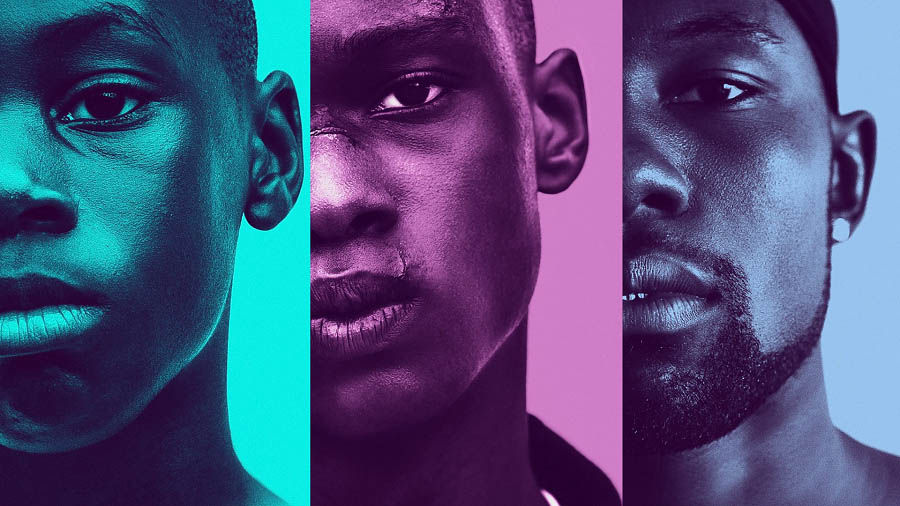
The message that Moonlight delivered across its audiences was powerful and fundamental to its audiences: you must never change who you are because of expectations others have for you. Each of us is unique and beautiful in our own way, and it is the variety of individuals that makes life fascinating and compelling. The film also warns us against becoming the hostile existence to other people, and to embrace differences in all its beauty.
Moonlight scored 7.4 on IMDB, 99% on Metacritic and 98% on Rotten Tomatoes
Watch the official trailer.
TO KNOW MORE


Comments